FlemingClans.com

"Scotland's Fleming Clan: a Genealogical History" - coming in 2027!
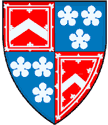 Sir William Fleming, Gentleman Usher and Vice-Chamberlain
(c1611 - 1672)
Basic information about this person: \click here\
Sir William Fleming, a younger son of the 2nd Earl of Wigtown, was a trusted royal messenger during the civil wars. He carried letters and instructions between King Charles I, Charles II, the queen, the Marquess of Montrose and the Scottish army, and ended his career as Vice-Chamberlain of Scotland.
Family background
William was born around 1611, a younger son of John Fleming, 2nd Earl of Wigtown, and Margaret Livingstone. He was a student at Glasgow in 1629, boarding with one servant.
Between king and Covenant
In September 1640 the Covenanting army that had invaded England sent William to King Charles I with proposals for a settlement, which led to the Treaty of Ripon. In 1641 the king granted him a pension of two hundred pounds sterling. In January 1642 William was one of the men sent to arrest the five members of the House of Commons accused of treason and to secure their trunks, the episode that helped to start the English Civil War.
Royalist agent
In 1644 William signed Montrose’s bond against the Solemn League and Covenant at Oxford, and in 1645 he negotiated on the king’s behalf with Scottish nobles. In December 1647 he travelled from the imprisoned king at Carisbrooke Castle to London and back. In 1648 he was sent to invite the Prince of Wales to Scotland, and that August he went to Amsterdam for the queen and prince to collect ten thousand pistols and ammunition for Scotland.
After the execution of Charles I in 1649, William carried letters for Charles II between Jersey, The Hague and Scotland, including a letter to the king’s aunt, Elizabeth, Queen of Bohemia. In May 1650 he carried the king’s instructions to Montrose, who was captured and executed that month.
Royal servant
In January 1651, at Perth, Charles II confirmed William as Gentleman Usher of the Privy Chamber and made him Vice-Chamberlain of the Household. After the Restoration he was appointed a Commissioner of the Exchequer in 1661, and in 1667 he was granted a pension of four hundred pounds a year. He died before 26 June 1672. His heir of line was his grand-niece Jean Fleming, Countess of Panmure.